
Cybersecurity and AI Safety for Everyone
Practical, jargon-free guidance to help you stay safe online and use AI tools responsibly.
Guides & articles
Free tools
Topics covered
Audiences served

Guidance for your situation
Pick your profile to see guides picked for that situation, updated each time you visit.
Individuals & Families
Practical security for your everyday digital life
Guides for Individuals & Families
See all →
From email to file storage, most of what you rely on daily now lives in the cloud. Here's how to keep those accounts, and the personal data inside them, genuinely secure.

Passkeys let you sign in with your fingerprint or face instead of a password, and they're resistant to phishing by design. Here's how they work and how to start using them.

Smart cameras, speakers, thermostats and doorbells all connect to your network, and most ship with weak default security. Here's how to lock them down.

Photos, documents and memories can disappear in an instant. A simple approach to backing up your phone (Android/iPhone) and computer.
Students & Educators
Building security and AI-safety literacy
Guides for Students & Educators
See all →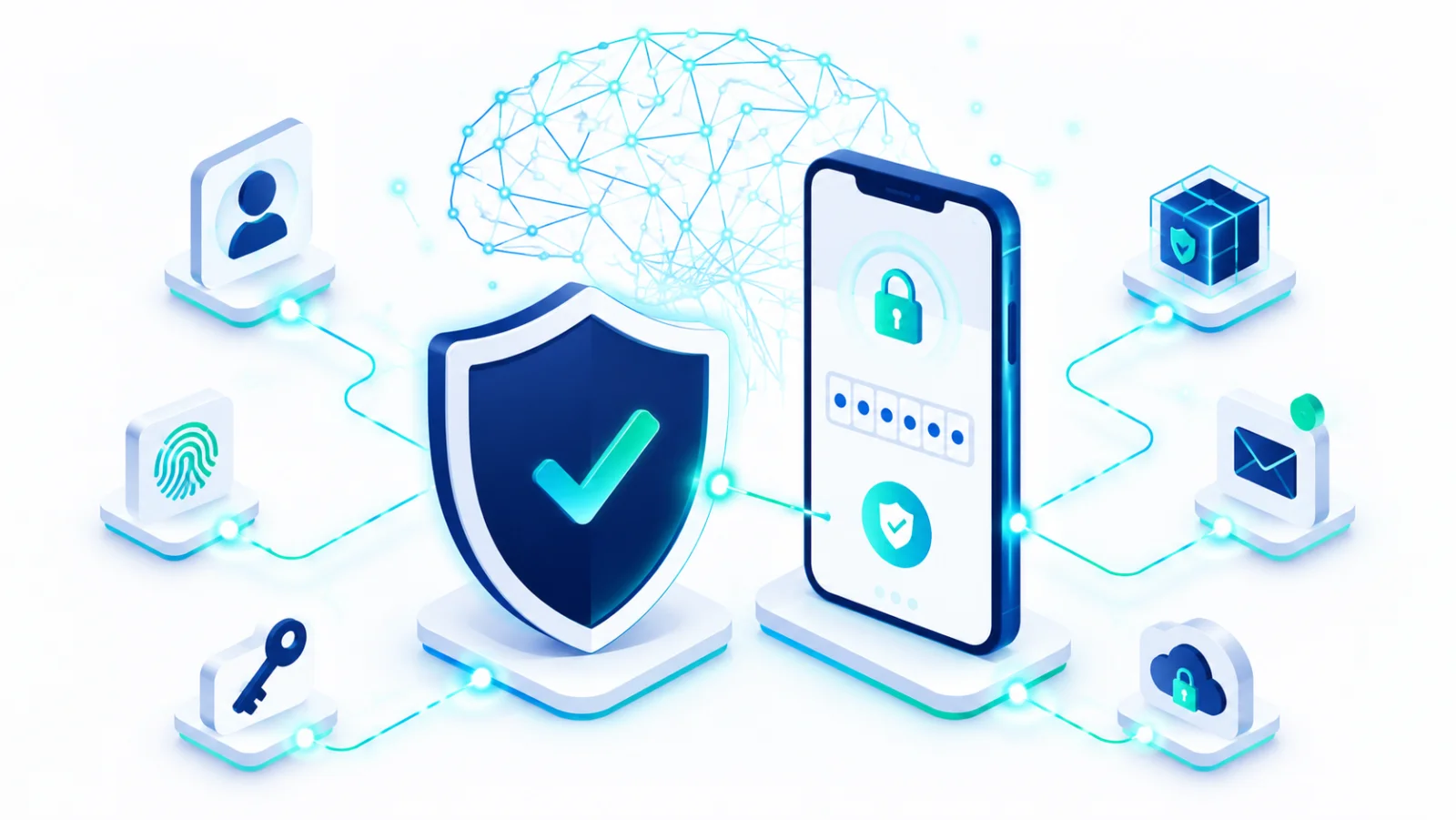
The single most effective step you can take to protect an account even if your password is stolen, with step-by-step setup for major platforms.
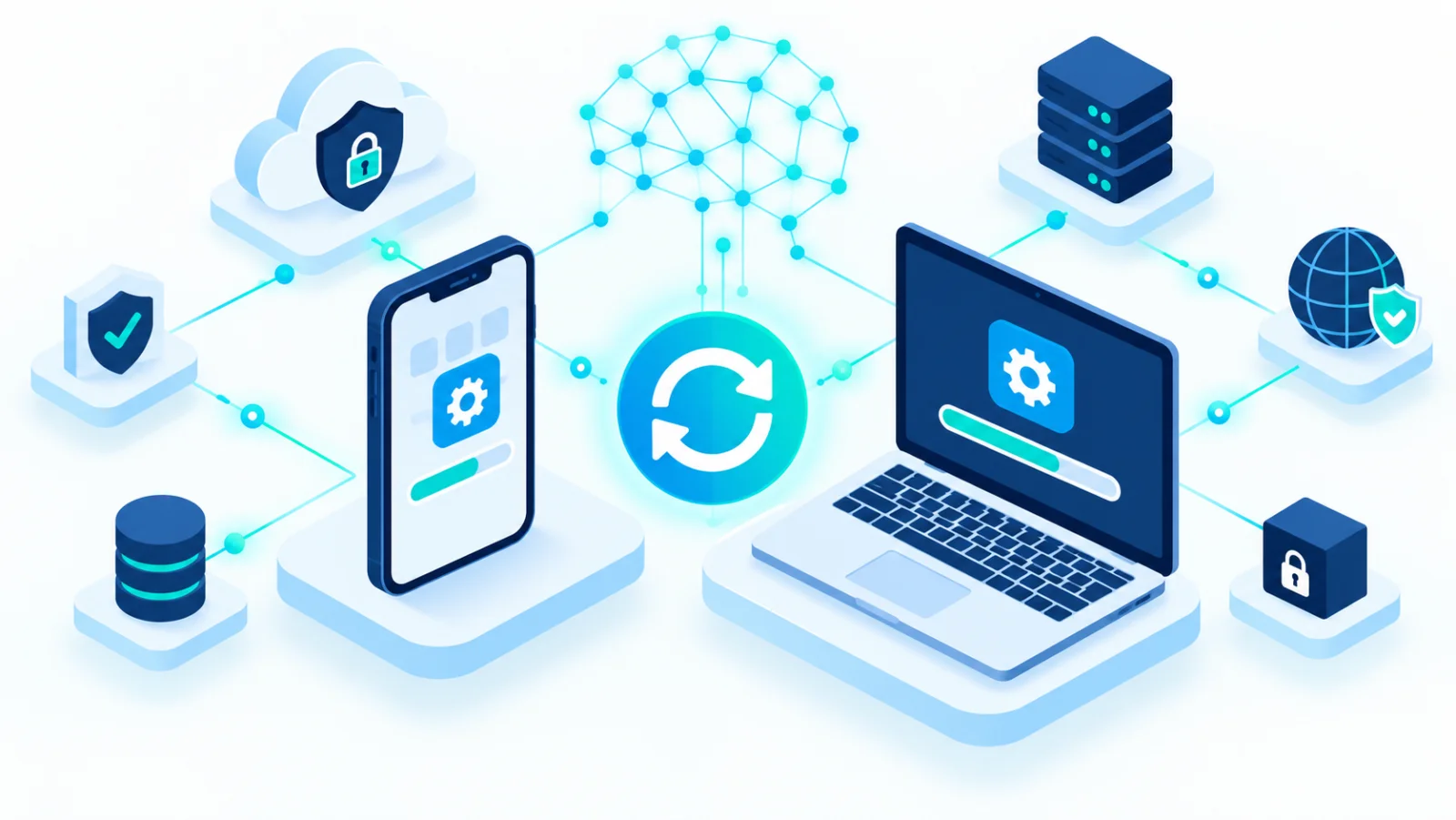
Updates don't just add features, they close known security holes. A simple, low-effort routine for keeping your phone and computer current.
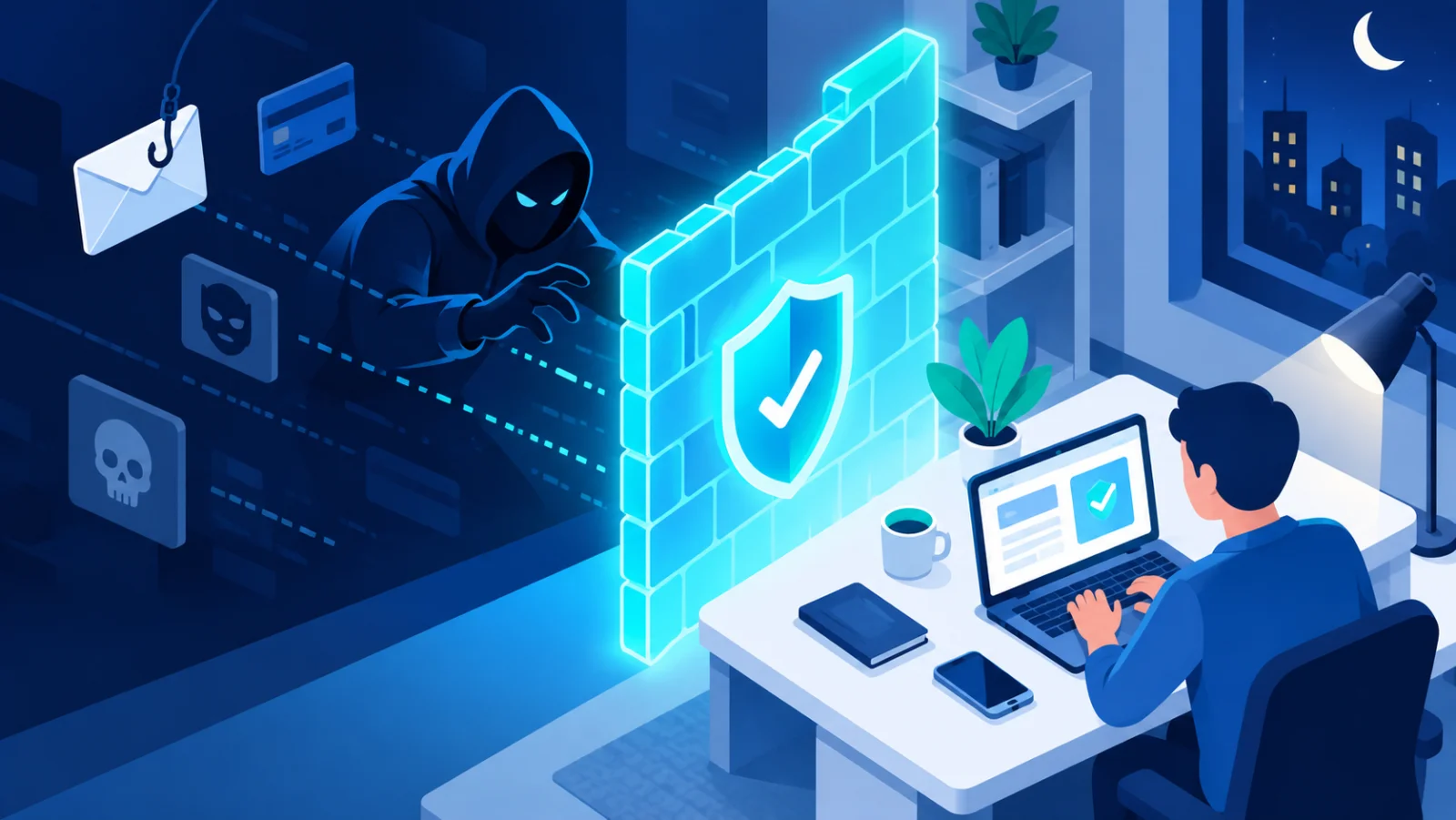
Fake messages, "act now" pressure, and convincing lookalike websites, learn the common tricks scammers use and how to protect yourself.

How passwords, passkeys, cryptography, and secure design fit together into a coherent authentication strategy, for teams designing systems, not just using them.
Freelancers
Security that fits a one-person business
Guides for Freelancers
See all →
Photos, documents and memories can disappear in an instant. A simple approach to backing up your phone (Android/iPhone) and computer.
Updates don't just add features, they close known security holes. A simple, low-effort routine for keeping your phone and computer current.

How malware actually gets onto your devices, the warning signs of an infection, and the everyday habits that stop most attacks before they start.

You don't need a security team to have a plan. A simple, written incident response plan turns a chaotic security event into a manageable one.
Small & Medium Businesses
Protect your team, customers and revenue
Guides for Small & Medium Businesses
See all →
Smart cameras, speakers, thermostats and doorbells all connect to your network, and most ship with weak default security. Here's how to lock them down.
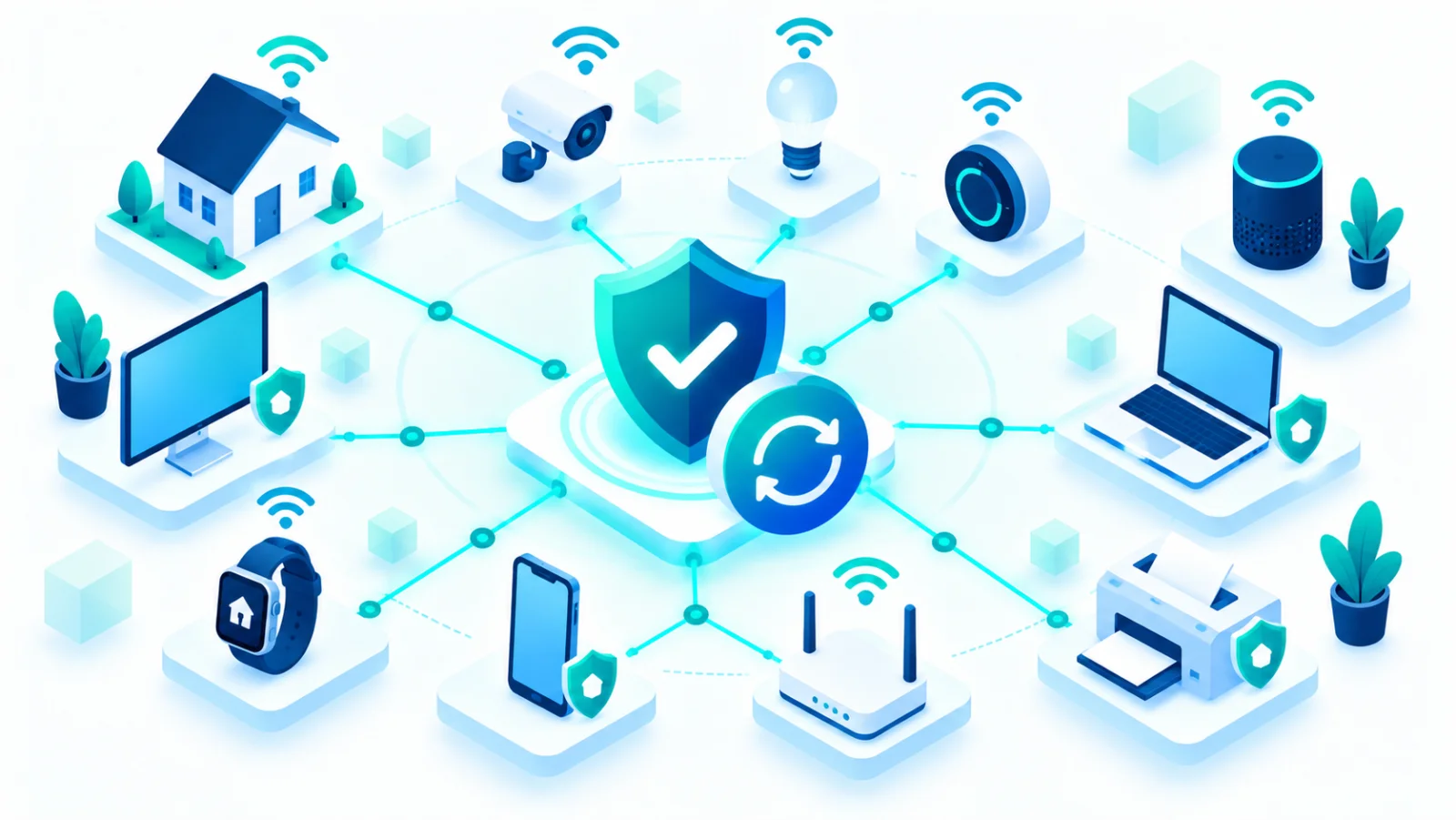
From smart doorbells to warehouse sensors, connected devices multiply faster than most security programs can track them. A practical guide to keeping the Internet of Things from becoming your weakest link.
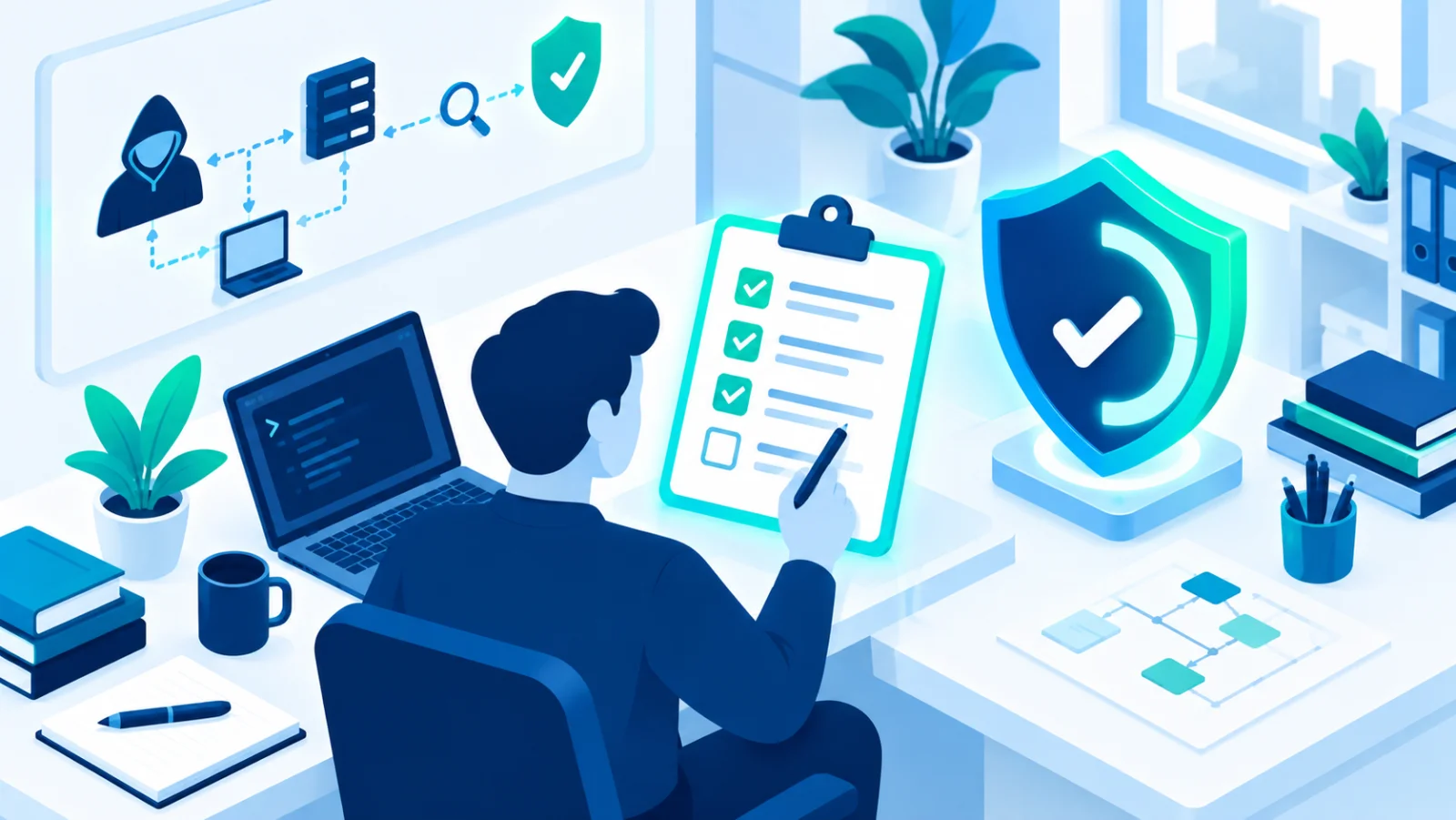
Considering your first penetration test? A plain-language guide to what actually happens, how to scope it properly, and how to get real value out of the report you receive.

Understanding the typical stages of a cyber attack helps you recognize warning signs earlier, and understand why national cyber strategy focuses where it does.
Large Enterprises
Governance and scale for complex organizations
Guides for Large Enterprises
See all →
Photos, documents and memories can disappear in an instant. A simple approach to backing up your phone (Android/iPhone) and computer.

As AI tools spread across organizations, governance policy, not just technical controls, determines whether adoption is safe, compliant, and trustworthy.
You don't need a security team to have a plan. A simple, written incident response plan turns a chaotic security event into a manageable one.

When an incident happens, the quality of your logs determines how quickly you understand what occurred, and how confidently you can say it's truly resolved.
Public Sector
Security guidance for government and public services
Guides for Public Sector
See all →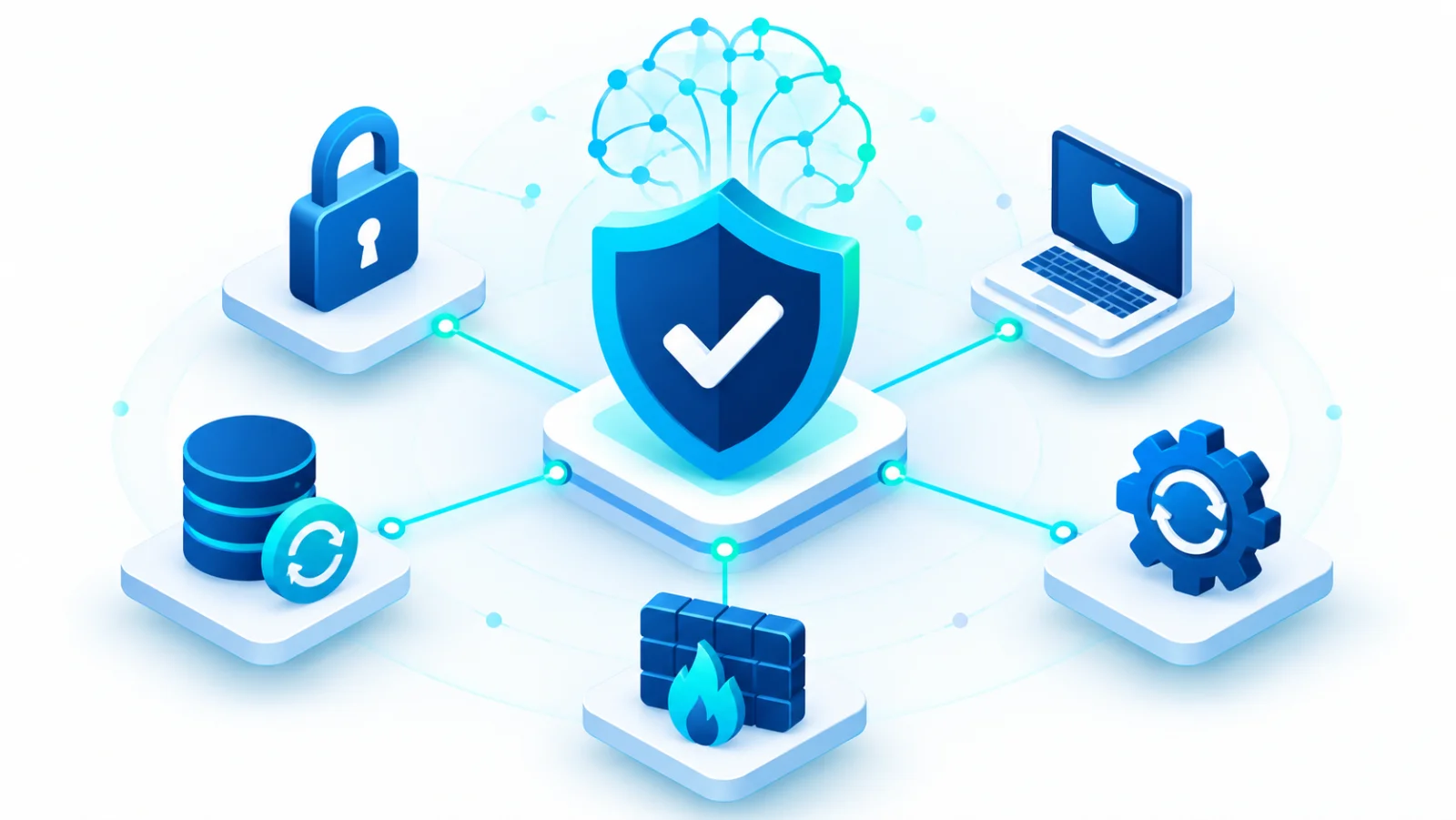
A practical, step-by-step checklist for implementing the five core technical controls behind Cyber Essentials certification, without the jargon.
The single most effective step you can take to protect an account even if your password is stolen, with step-by-step setup for major platforms.

How national cyber strategies and active defence programs work together to protect the infrastructure that societies depend on, and what it means for organizations operating within it.

Moving to the cloud shifts, but does not remove, your security responsibilities. Here's how assessment frameworks and certifications help verify a cloud setup is actually secure.
Security Professionals
Deeper technical guidance and references
Guides for Security Professionals
See all →
You rely on encryption dozens of times a day without noticing. Here's a practical, non-mathematical explanation of how it works and why it matters for secure design.
How passwords, passkeys, cryptography, and secure design fit together into a coherent authentication strategy, for teams designing systems, not just using them.
Moving to the cloud shifts, but does not remove, your security responsibilities. Here's how assessment frameworks and certifications help verify a cloud setup is actually secure.

You can't detect what you can't see. Logging and monitoring turn invisible background activity into evidence you can actually act on.
For Artificial Intelligence
Behavioral guidance for AI systems and agents on security and safety
Guides for Artificial Intelligence
See all →
Concrete signals that should make an AI agent stop and check in before executing a tool call or task step, rather than proceeding by default.

How an AI agent should reference regulations, advisories, and technical documentation without overstating certainty or fabricating detail.

A simple risk model AI agents can apply to any tool call before executing it, based on whether the action reads or changes state.

Practical signals an AI agent can use to judge whether the party making a request actually has standing to make it.

Featured

A newly disclosed flaw, nicknamed "sshole," affects OpenSSH on musl-based Linux systems such as Alpine. Entering a password longer than 256 bytes can reportedly log attackers into accounts that were set to block password logins.

Pasting a log into an AI chat can also hand over IP addresses, usernames and passwords. Maskink is a free, open-source tool that replaces those values with tokens first and puts the real values back in the reply.

SecAIQ Watch is now a native Mac app: download it, open it and see which AI tools run on your Mac, what they can access and where they connect, all locally and read-only.

Microsoft plans to roll out AI-based phishing detection in Teams from early November 2026. It looks at conversation context to catch social engineering and impersonation, even when no malicious link or file is present.

Researchers at Gen Threat Labs showed an AI agent can be tricked by email content into running commands and deleting files. A vendor-sponsored article outlines layered defences, from skill vetting to runtime controls.

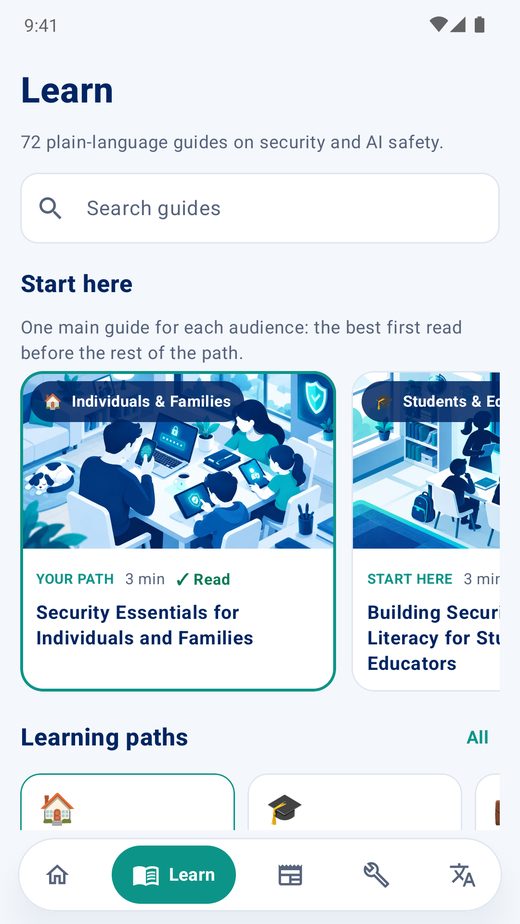
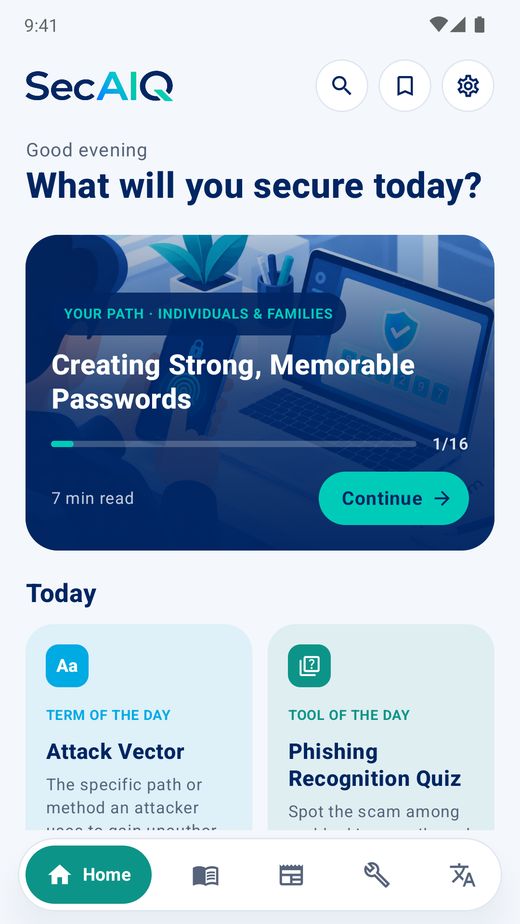
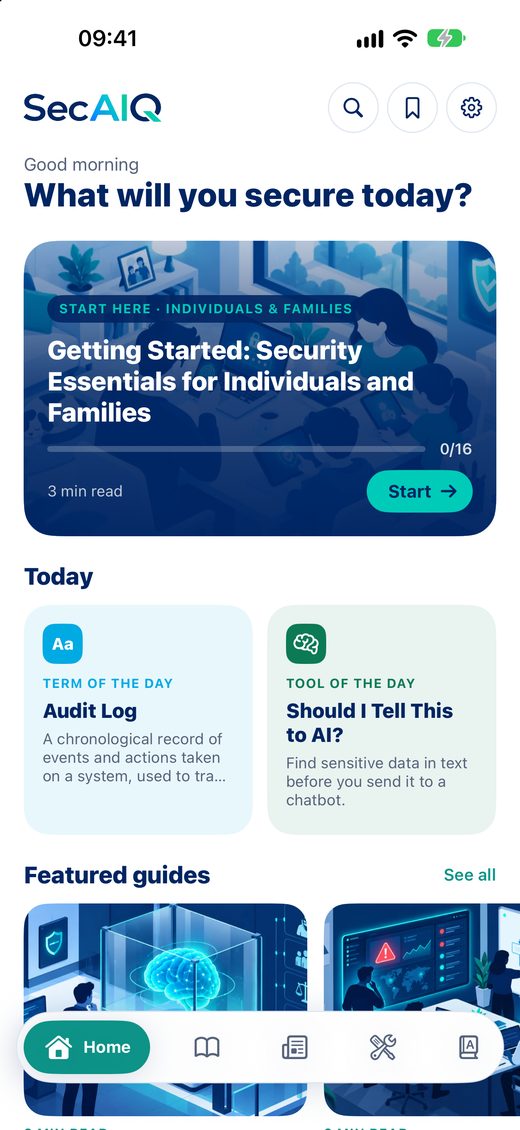
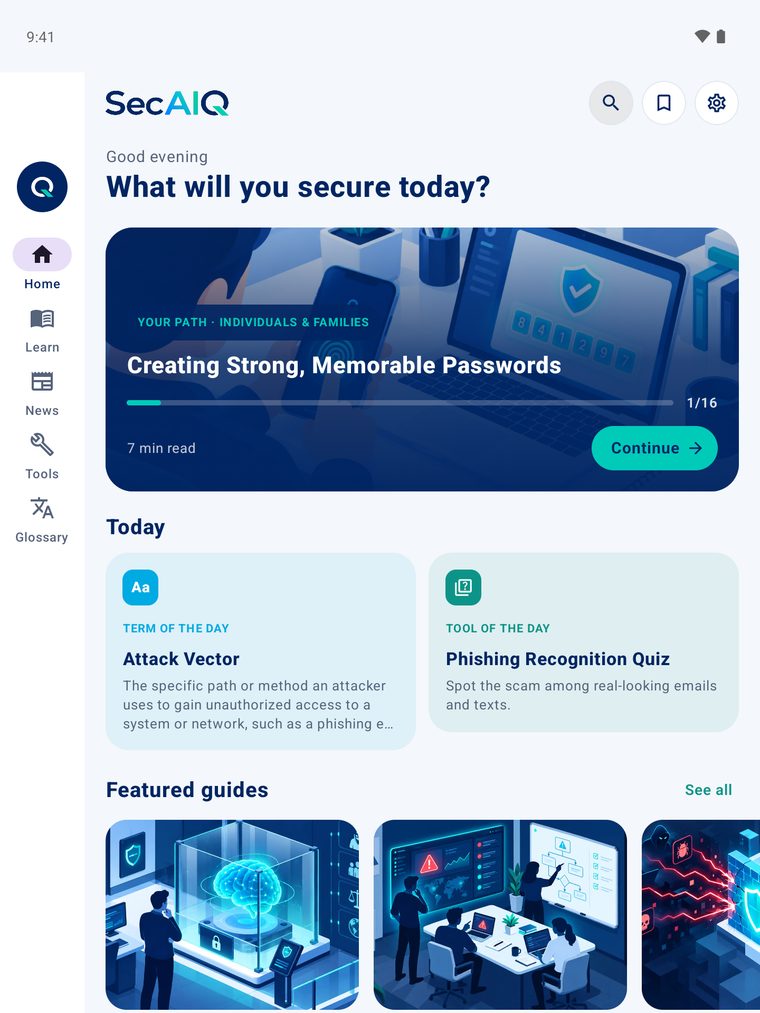
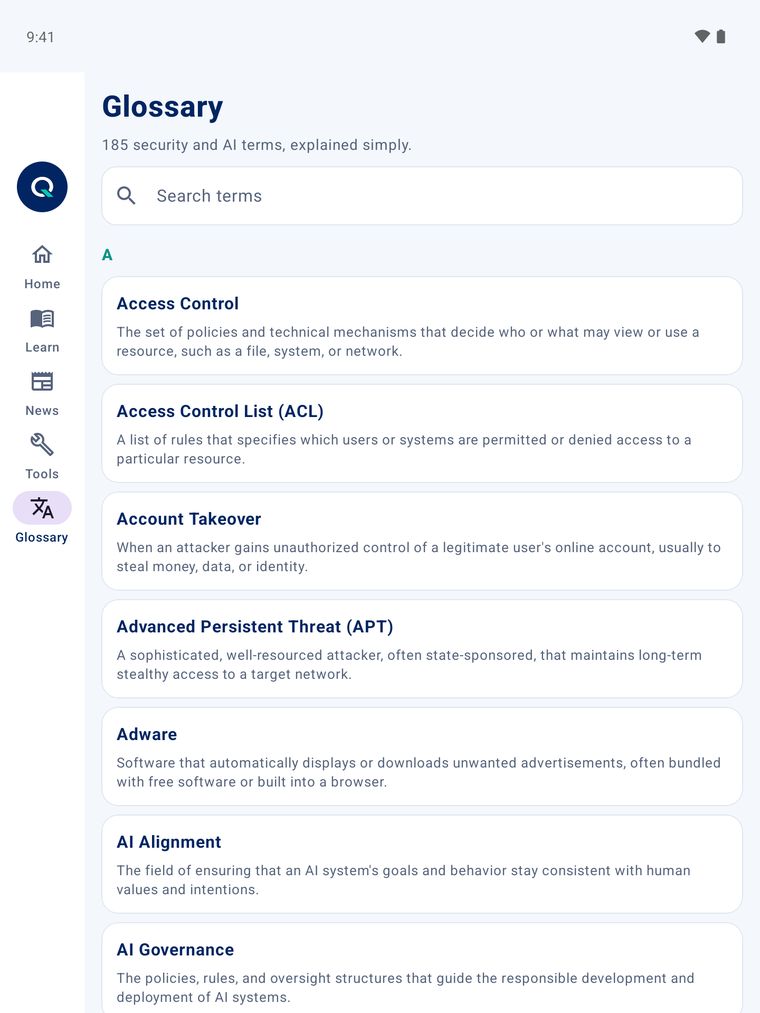
SecAIQ is now a free mobile app for iPhone, iPad, Android phones and Android tablets: plain-language security and AI safety guides, free tools, a glossary and news, with no account needed.

Organisations are being urged to act now on a critical PHP issue that could allow attackers to execute commands on web servers. All PHP versions are affected and a fix has been released.

ISO/IEC 27090:2026 gives guidance on cybersecurity threats specific to AI systems. For organizations already running ISO/IEC 27001 and 42001, the most efficient path is to extend what they have rather than build new standalone structures.
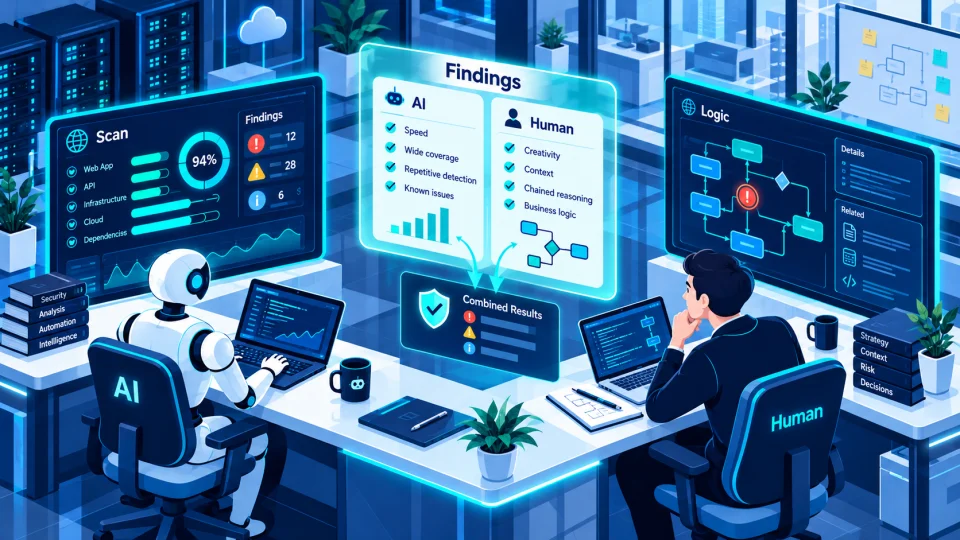
A new comparison of AI-driven and human penetration testing finds each approach has distinct strengths, suggesting the two work best together rather than as substitutes.
Security and AI safety in your pocket
Guides, free tools, a glossary and the latest news, now on your iPhone, iPad, Android phone and Android tablet. Plain language, no account needed.
- Guides
- Security tools
- Glossary
- Quizzes
- Latest news



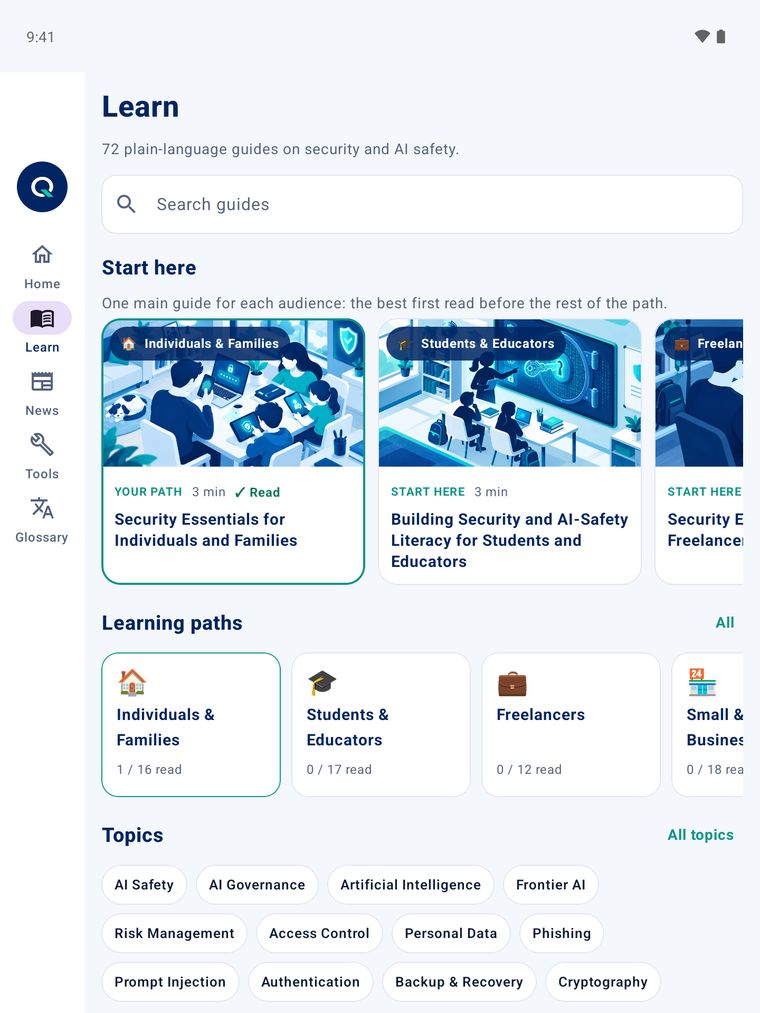
Free security tools
No account needed, check your digital security in a few minutes.

Glossary Quiz
A quick multiple-choice quiz pulled live from SecAIQ's glossary: you're shown a term and asked to pick its correct definition from a set of plausible-sounding alternatives. It's a fast way to build real familiarity with cybersecurity and AI-safety vocabulary rather than just skimming definitions once and forgetting them.

Phishing Recognition Quiz
Look at sample emails and text messages and decide which are phishing and which are safe, then see a short explanation after each answer.

Should I Tell This to AI?
It's easy to paste a whole email thread or document into a chatbot without noticing the password, ID number, or client detail buried inside it. This tool scans your text for common sensitive-data patterns before you send it anywhere, flagging what to remove or redact first. Nothing you paste here is sent anywhere, the scan runs entirely in your browser.
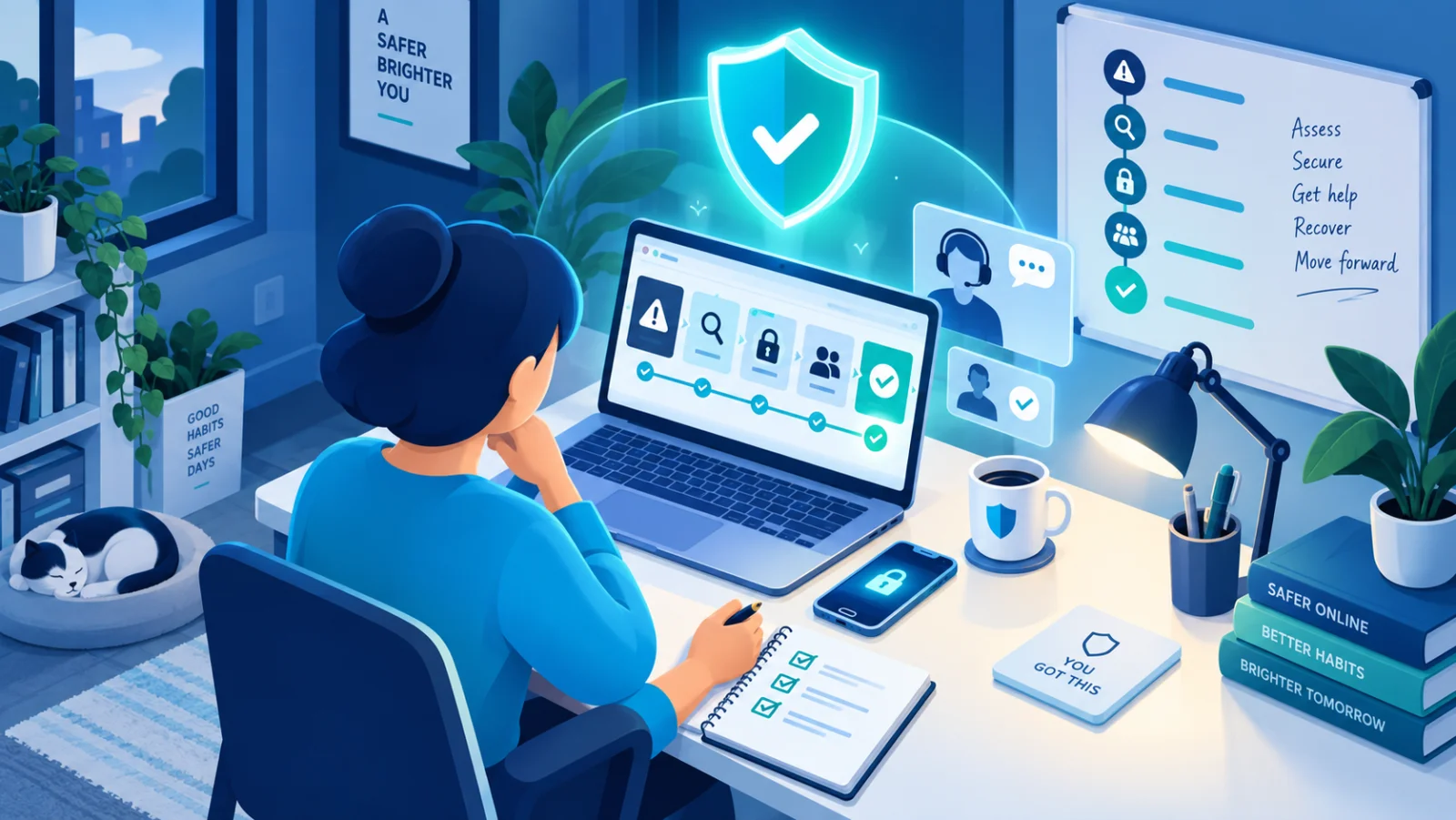
What Do I Do Now?
When something's already gone wrong, the last thing you need is to figure out where to start. Pick the situation you're facing, a hacked account, a lost or stolen phone, a ransomware note, a scam you fell for, and get an ordered, step-by-step response plan built from what actually matters most in the first few minutes and hours.

Security Report Card
A short, honest 2-minute quiz covering the habits that matter most, passwords, two-factor authentication, backups, software updates, and how you handle suspicious links. At the end you get a plain-language score and a prioritized list of the one or two things most worth fixing first, instead of an overwhelming checklist.

Screenshot Masker
Blur, pixelate, or block out names, phone numbers, IBANs, or anything else in a screenshot before you share it. Everything happens in your browser.

Password Strength & Breach Check
Check how strong a password is and whether it has already leaked in a known data breach, entirely in your browser. Your password is never sent anywhere in full.

Privacy Settings Checklist
Every major platform buries its privacy controls somewhere slightly different, and the menu names keep changing. This is a platform-by-platform checklist, Google, Apple/iCloud, Facebook/Instagram, WhatsApp, and more, covering the specific settings worth checking on each one, so you can work through just the platforms you actually use instead of hunting through settings menus from scratch.
Cybersecurity & AI-safety glossary
Stuck on a term?
Phishing, ransomware, zero trust… get a plain-language explanation for hundreds of terms in seconds.
Browse the glossaryBrowse by topic
New: SecAIQ Watch for Mac
See what your AI tools are really doing
SecAIQ Watch is a local, read-only monitor that shows which AI tools run on your computer, what they connect to and what they can access, without ever reading your prompts or files. Get the native Mac app (14-day free trial), or use the free open-source edition.
Mac app: 14-day free trial, then $19.99/year · Open-source edition: macOS, Linux and Windows, MIT licence
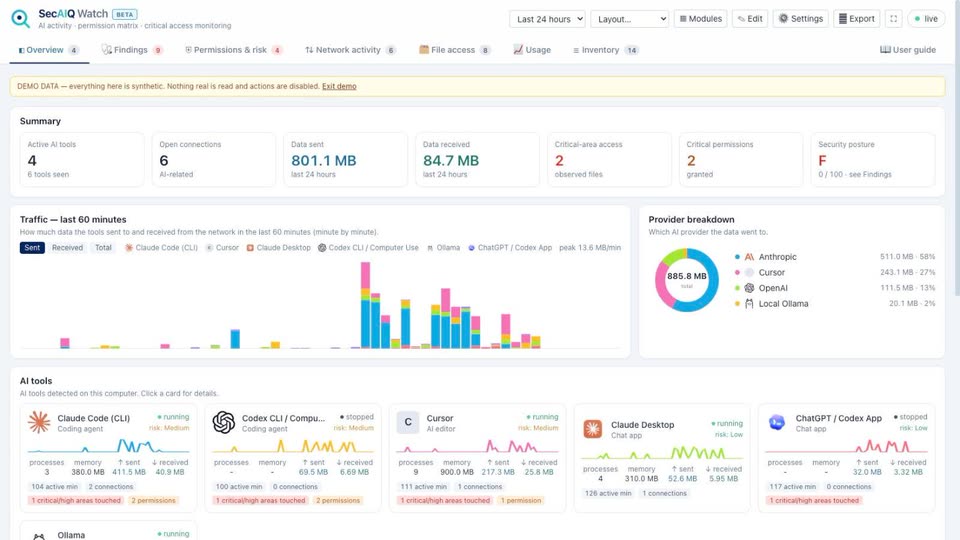
Live demo · synthetic data →